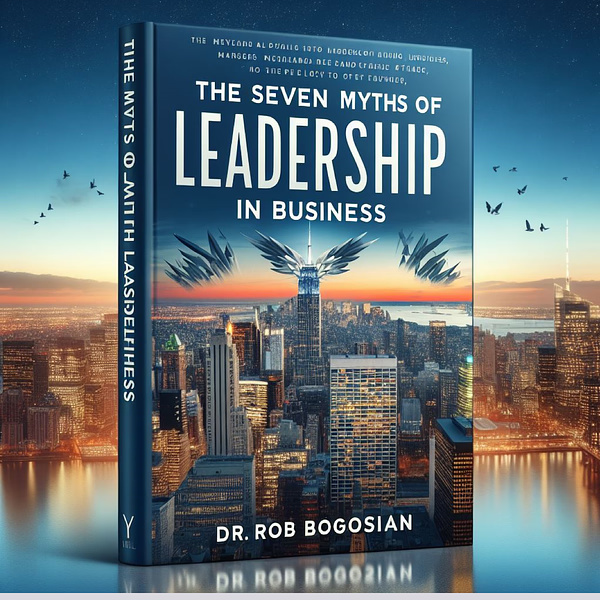
Dr. Rob Bogosian dismantles the most damaging leadership platitudes and gives managers the real information they need to lead effectively in a complex world.
Available for bulk orders and organizational licensing. Contact us for details.
By Dr. Rob Bogosian
In today's complex, rapidly changing business environment, leaders need more than inspiration and platitudes — they need clarity, rigor, and real insight. In The Seven Myths of Leadership in Business, Dr. Rob Bogosian challenges the conventional wisdom that has long shaped how organizations select, develop, and evaluate leaders.
Drawing on decades of research, consulting experience, and the perspectives of thousands of leaders, Dr. Bogosian identifies seven pervasive myths that lead well-intentioned managers astray — and replaces each with a more honest, effective, and evidence-based framework for leadership.
This is not a book about leadership styles or personality types. It is a book about the ideas we've accepted uncritically that limit our potential as leaders — and the more rigorous thinking that unlocks it.
"The Seven Myths of Leadership provides managers with the information they need to lead effectively in a complex world where platitudes have a minimal place."
— Dr. Rob Bogosian

Each myth is examined through the lens of research, real-world examples, and the alternative truths that effective leaders embrace.
The belief that leadership is an innate trait rather than a developed capability leads organizations to overlook talented people and absolves leaders of the responsibility to grow. Dr. Bogosian examines the research that consistently shows leadership effectiveness is primarily a function of deliberate development, not personality or genetics.
The "strong and silent" leadership archetype has caused enormous damage to organizational culture and leader effectiveness. This chapter explores why the most effective leaders demonstrate appropriate vulnerability, how it builds trust and psychological safety, and why its absence creates the very cultures of silence organizations most need to avoid.
The myth that healthy decision-making requires everyone to be on board leads to groupthink, artificial harmony, and the suppression of dissent. Dr. Bogosian clarifies the distinction between genuine alignment and manufactured consensus — and why leaders who chase the latter consistently undermine their organization's performance.
Promoting your best individual contributors into leadership roles is one of the most common — and most costly — talent mistakes organizations make. This chapter examines why the skills that drive individual performance are often inversely correlated with leadership effectiveness, and what competencies actually predict leadership success.
When leaders assign ownership of culture to Human Resources, they abdicate the most powerful lever they have for organizational performance. Dr. Bogosian makes the case — backed by research — that culture is formed and sustained by leaders at every level through their daily behavior, and that no HR program can substitute for that.
Perhaps the most dangerous myth in the book: the assumption that when employees don't push back, they agree. Drawing on the research behind Breaking Corporate Silence, this chapter shows why employee silence almost always reflects fear, futility, or disengagement — not satisfaction — and what leaders must do to surface the truth.
The "training event" model of leadership development — where leaders attend a program and return unchanged — persists despite overwhelming evidence of its ineffectiveness. This concluding chapter presents a model for continuous, contextual leadership development that builds capability over time rather than in isolated bursts.